In this lab we are using PCR in order to track any genetic disease we might, but hopefully don't carry. Like in any Polymerase Chain Reaction, the main goal is to first create large amounts of DNA from a small amount for each person in the lab group which is called amplification. We will be amplifying our gene of interest (GOI) which will be our anonymous "genetic disease".
Procedure
Day 1:
We begin our lab by collecting cheek cells. In order to obtain a sufficient amount of cells, we first clean our mouths, then chew on our inner cheek for a few minutes. After that, we rinse our mouth with saline solution for 30 seconds and pipet the solution into a micro test tube labeled with our initials. we then centerfuged the saline/cheek cell solution which created a pellet sized collection of cells at the bottom of the tube. We then seperated the excess saline and pellet from one another and inserted teh pellet into another micro test tube which contained InstaGene. The microtubes then went through a series of hot water baths and then vortexed the the tubes to resuspend our cells.
Day 2:
On day 2 the first order of business was to centerfuge our test tubes which had been refrigerated overnight for 2 minutes at 6,000 x g. We then transdered 20 micro liters of the supernatant into the bottom of our PCR tubes being careful not to also transfer any matrix beads. Then 20 micro liters of the master mix was added to the PCR tubes. Lastly the PCR tubes were put into a thermacycler.
Day 3:
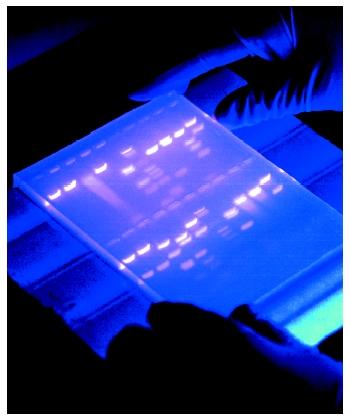
For day 3, be immediately pulse centerfuged the tubes for about 3 seconds. then 10 micro liters of loading dye was added to our PCR tubes and mixed. The agarose gel was then loaded into the apparatus and the electrophoresis chamber was covered with lysis buffer. We then loaded each sample into the gel along with two homozygous controls, a heterozygous control and a MMR (DNA standard).
Results:
On day 4 of our lab, we had our results. Thankfully, each one of the students in our lab group tested negative for this "mystery gene". But this does not mean that we are 100% safe from this unknown diseasse, because there are many instances of error that occur during the lab. One of them would be accidentally

B - Good Work - Next time include sources of error and a more thorough background
ReplyDelete